Archaeology, Excavation and What Remains
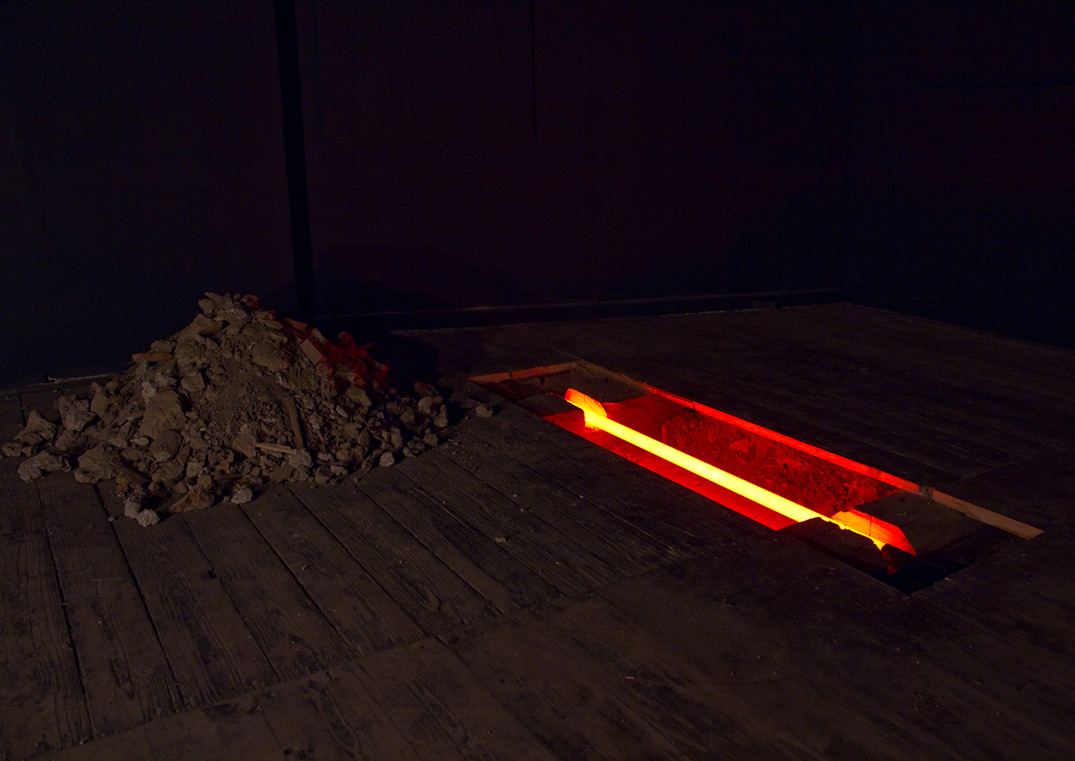
Archaeology, Excavation and What Remains, 2012, installation view. Materials: wood floor, red neon light, dirt, rocks. 70 × 120 mm.
The installation is a single room painted black. A long rectangular cut runs the length of the wooden floor, following the grain of the panels. Red neon sits down inside the cut, lighting the interior of the opening, which is filled with dirt. To the lower left a pile of dirt and rock stands about two feet high, the material taken out from under the floor. A heavy black curtain covers what is presumably a window, and a few electrical outlets remain visible on the wall. This is not a void or a non-place. It is an ordinary urban room, shrouded in black and shifted somehow into the register of a dream.
Nothing here is a prop. The building had been condemned for reconstruction and the curator gave us free rein, so the excavation is real. I cut directly into the actual floor panels and dug out the dirt that had been packed beneath them as the building's original insulation and fill. Then I went further, cutting deep channels into the structural crossbeams of the multistory blockhouse itself and setting the light down into those cuts. The room was not built to look excavated. It was excavated, down into the skeleton of the building, weeks before that skeleton was torn out for good.
Archaeology is a way of reaching back: into the past, into memory and dream, maybe into innocence itself. Here the dig is literal. What the floor gives up is the building's own buried material, exposed for a moment under red light and then lost in the renovation that followed. The title names the sequence plainly. Archaeology, then excavation, then what remains, which in this case was very nearly nothing.
The cut in the floor also reads as a wound. The work was made in Weimar, the city that gave its name to the Weimar Republic, the years in which Otto Dix made his Lustmord drawings and his self-portrait as a sex murderer. Lustmord fuses love and death into a single image, two poles that should never meet. The slit in the floor, and the bodily form it suggests, is my own version of that paradox: an opening that is at once a grave and a sign of life.
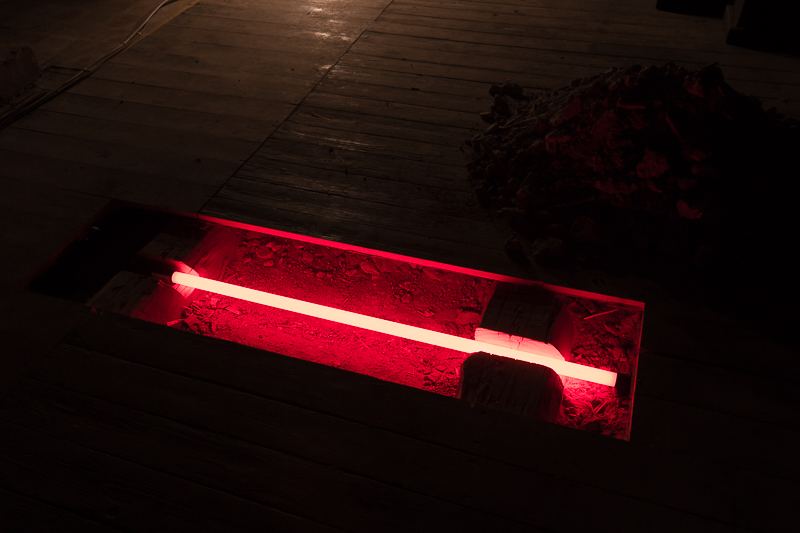
Archaeology, Excavation and What Remains, 2012, installation view.
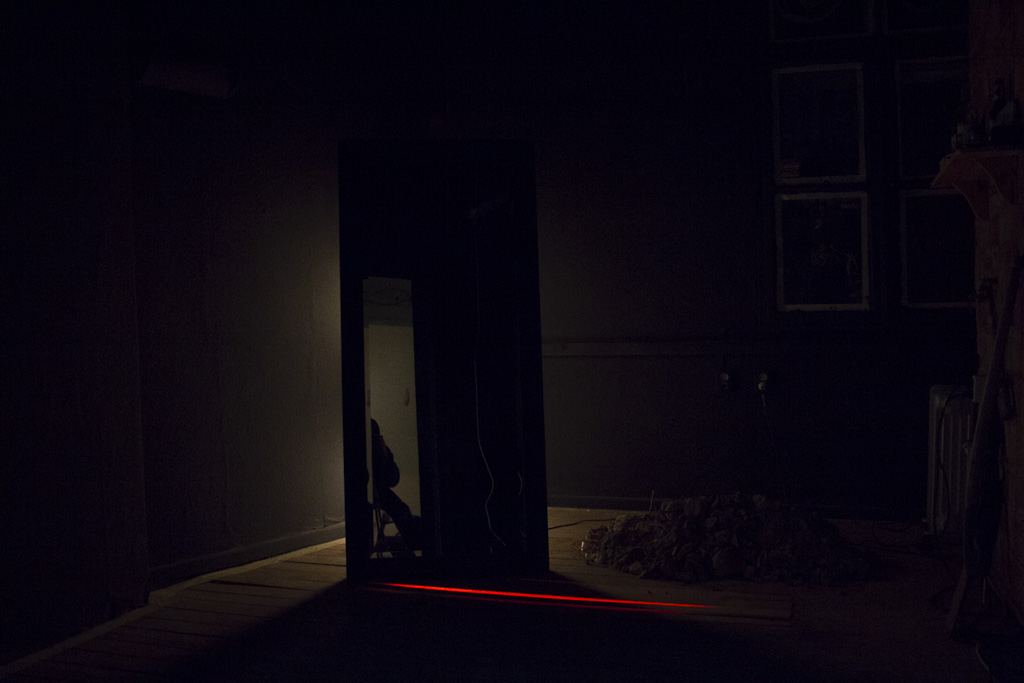
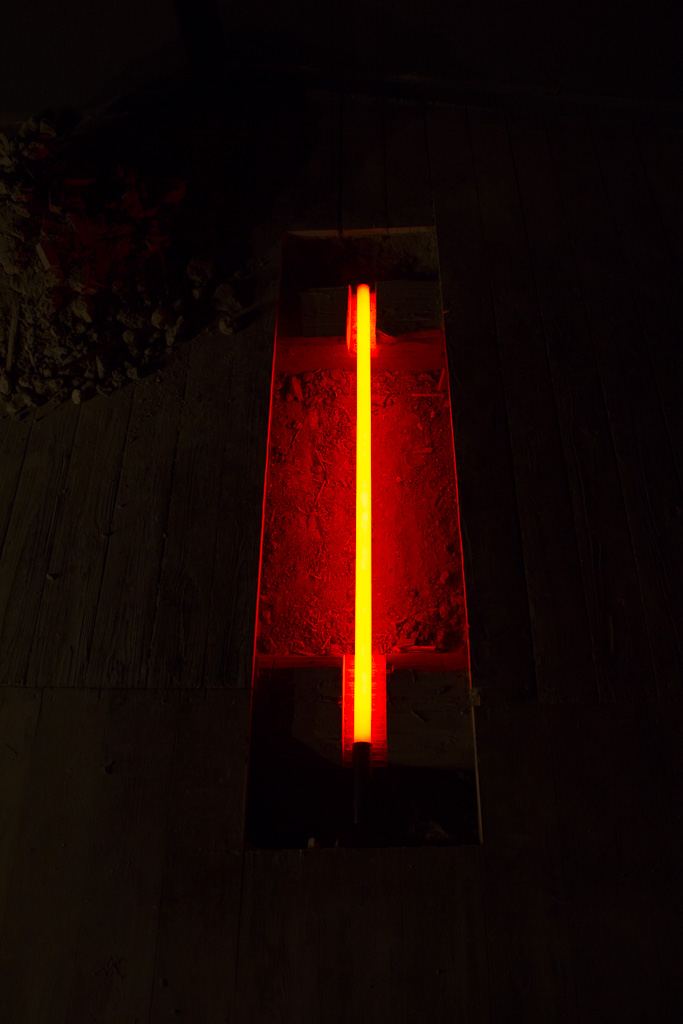
Archaeology, Excavation and What Remains, 2012, installation views.
Originally exhibited as part of the exhibition Adieu Marie, Marianstrasse 2, Weimar, Germany. After the exhibition the building was renovated.